
A Digital Lynching
A practical guide for individuals and organisations when the mobs gather

A note on who I am: I’m an investigative journalist who’s spent a decade reporting on the collision of technology and democracy including exposing the Facebook/Cambridge Analytica scandal for the Guardian and the New York Times. I’m now a co-founder of The Nerve, set up a year ago by five women journalists from the Guardian and Observer. This is my personal newsletter.
This newsletter is called How to Survive the Broligarchy because it draws on my decade of experience of both reporting on power and being targeted for doing so.
On Friday night, the shocking news broke of the death of Jason Arday, a black Cambridge University academic who had found himself in the blast zone of an online culture war; an apparent suicide.
Over the weekend, there have been pieces in the UK press about Cambridge University’s failures but almost nothing at all in the mainstream media about the mainstream media’s failures or the role it played in his death.
Arday was autistic and vulnerable. His friend, a world-leading expert in autism, Simon Baron-Cohen, issued a public warning that he considered him at risk of suicide.
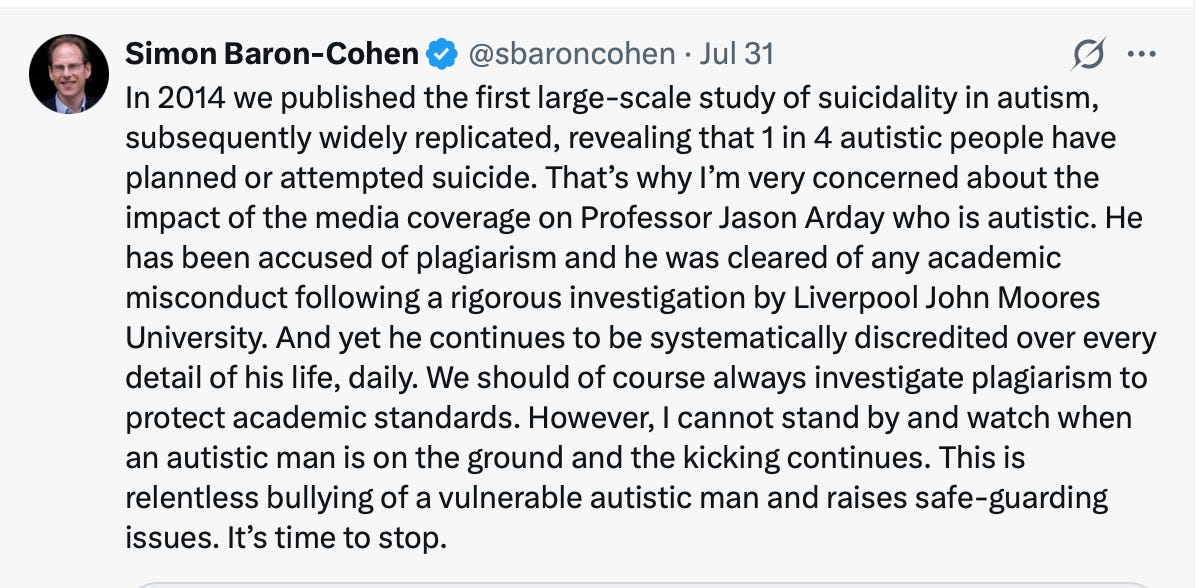
The media hounding didn’t just continue, it increased.
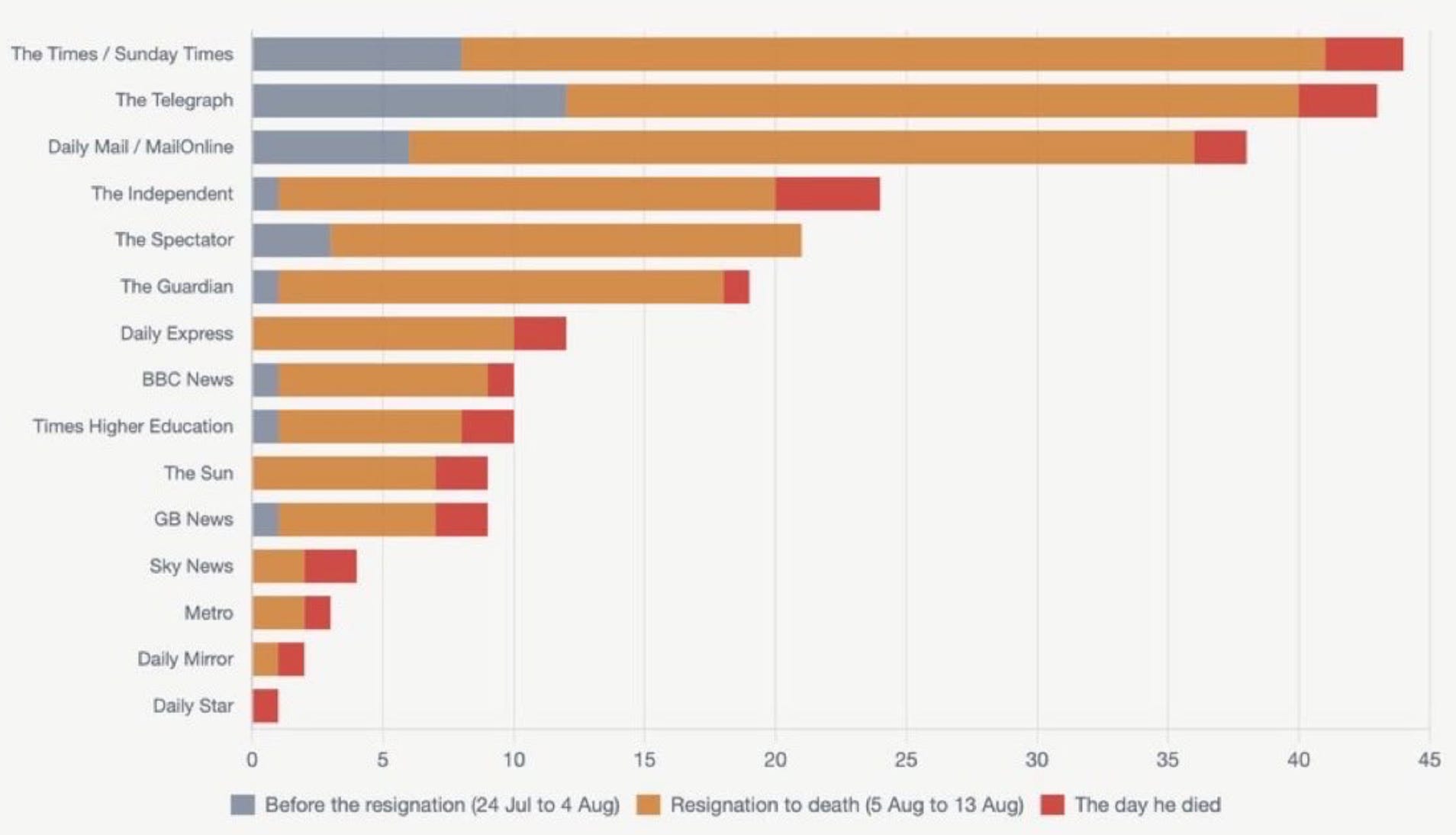
I can’t see any universe in which these titles will hold themselves to any sort of account. Because this is how culture wars work. The cultivation of targets that can be righteously attacked is the business model.
I wrote yesterday about the platform-enabled feedback cycle that fuels this.
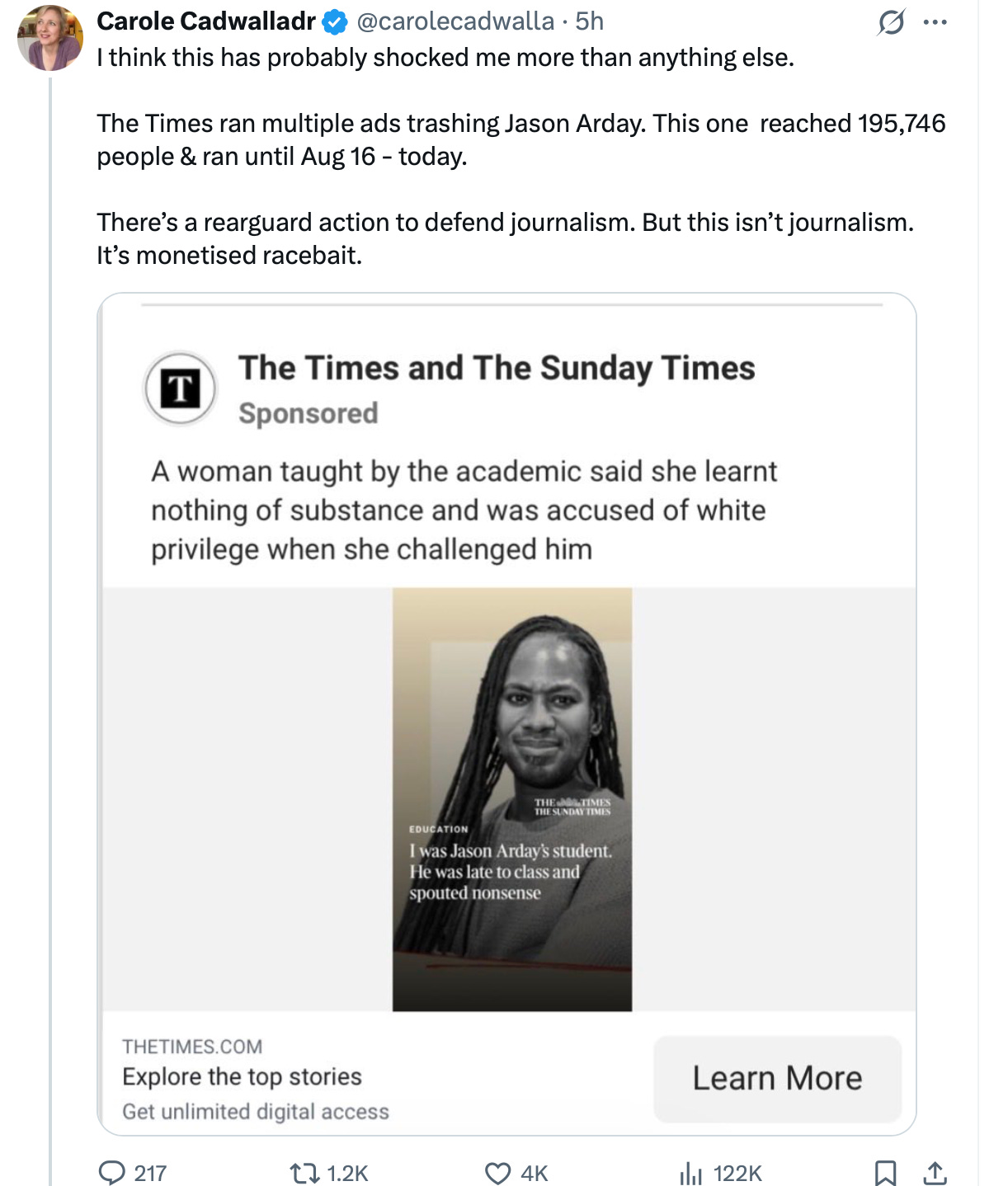
The article the Times paid to algorithmically amplify? It’s an anonymous account from a lone student who complained Arday gave her 70% for an essay when she felt she deserved 75%. It was published in UnHerd then republished in the Telegraph and Times and then pumped out to hundreds of thousands of people across different platforms.
This is what surveillance capitalism has given us. A recursive feedback loop that sees an ad team select a publication’s most clickbaity articles that leads to an increase in traffic that signals the “public interest” aka appetite to publish more articles. It’s a money machine.
I’m supposed to be taking time off but I’m here because there are ways to help someone who comes under attack. Arday wasn’t the first and he won’t be last. This isn’t an aberration. It’s a business model.
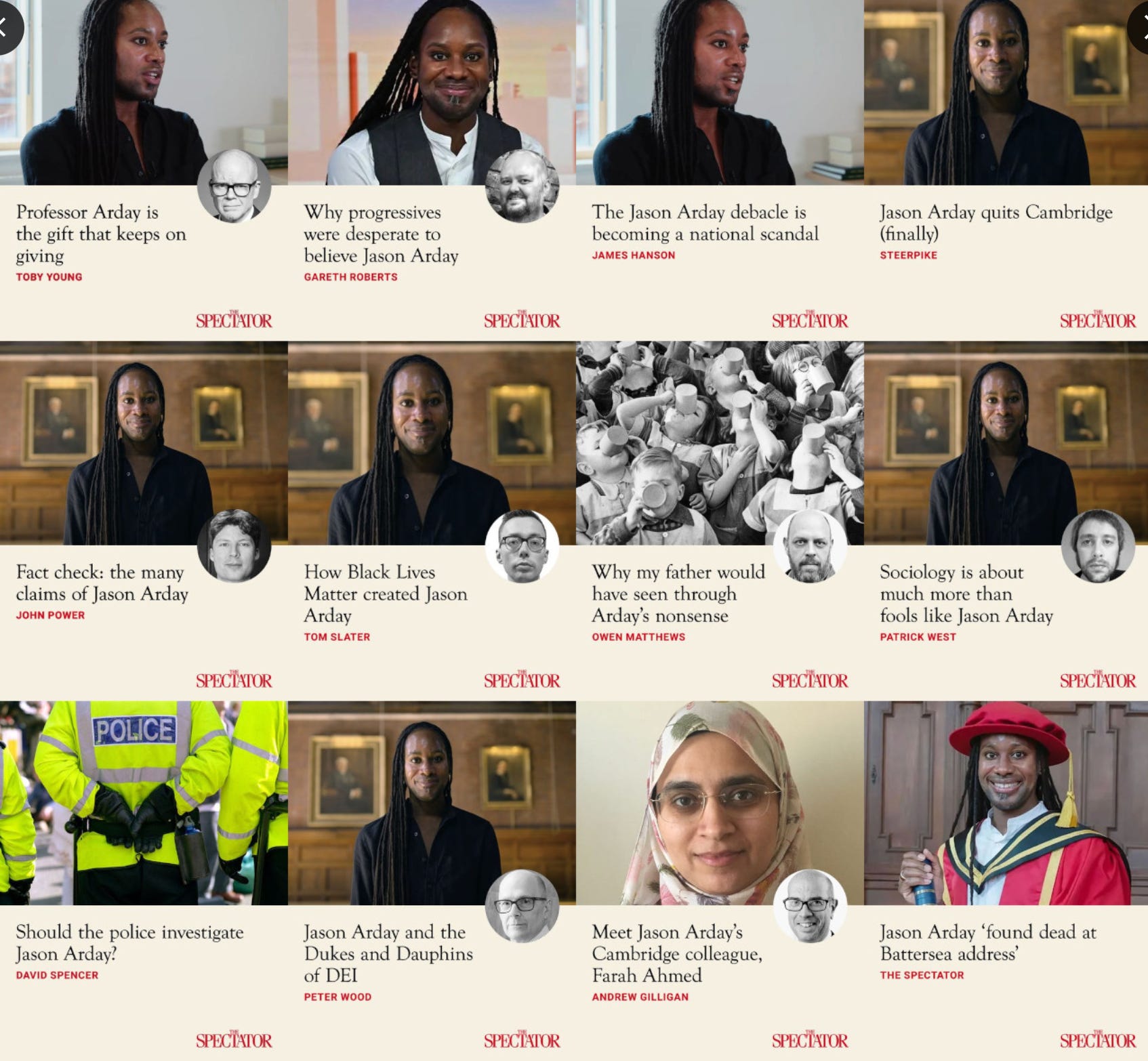
Even today, the Spectator is leading its site with a poisonous piece by Brendan O’Neill on the “tragedy of Jason Arday”.
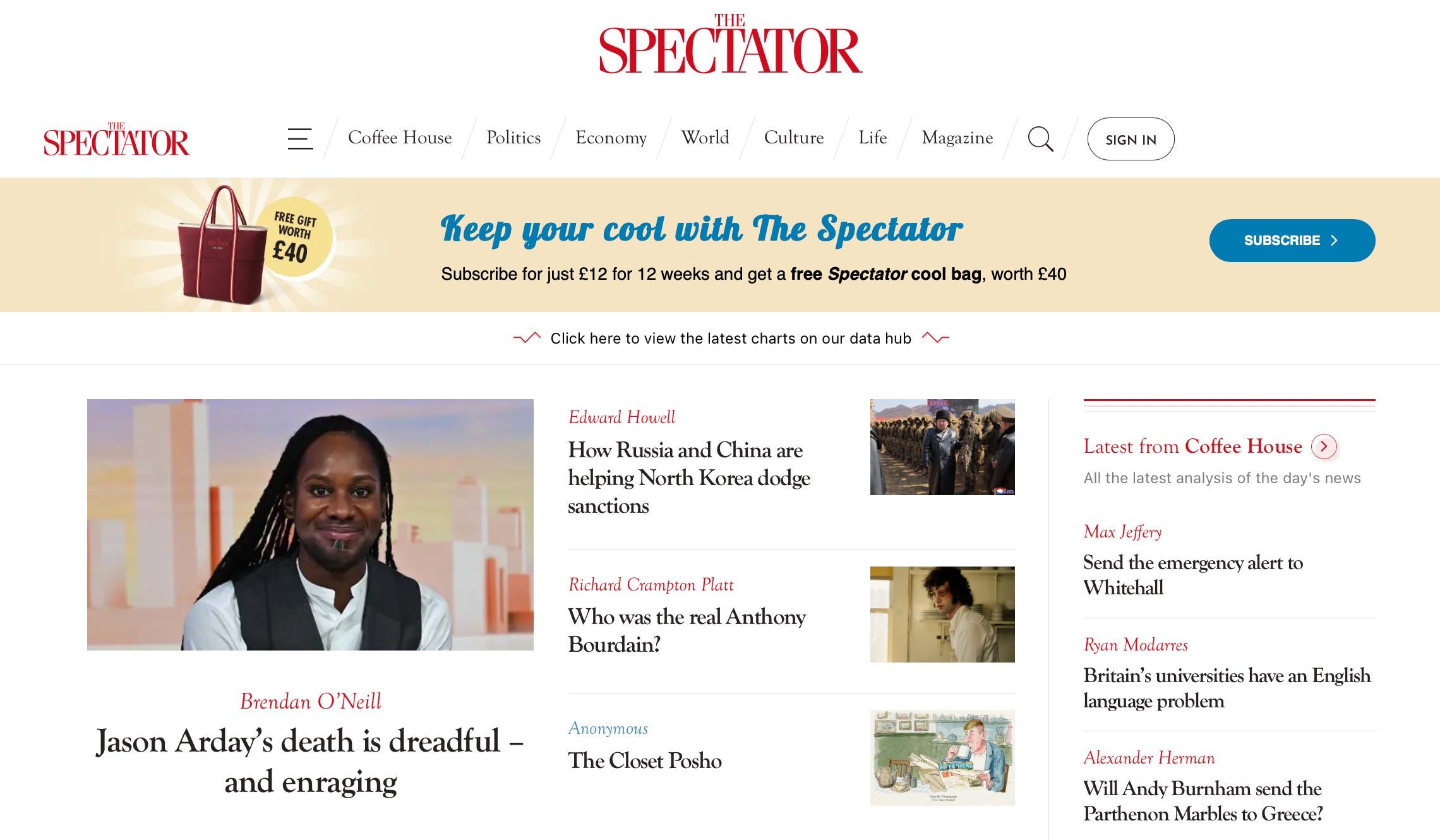
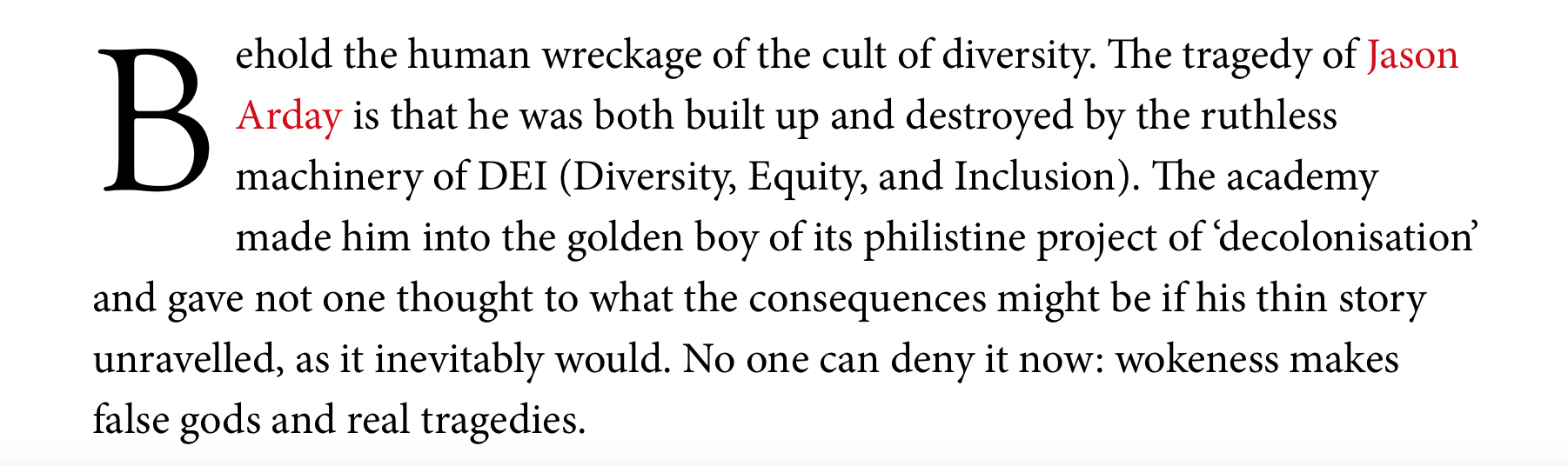
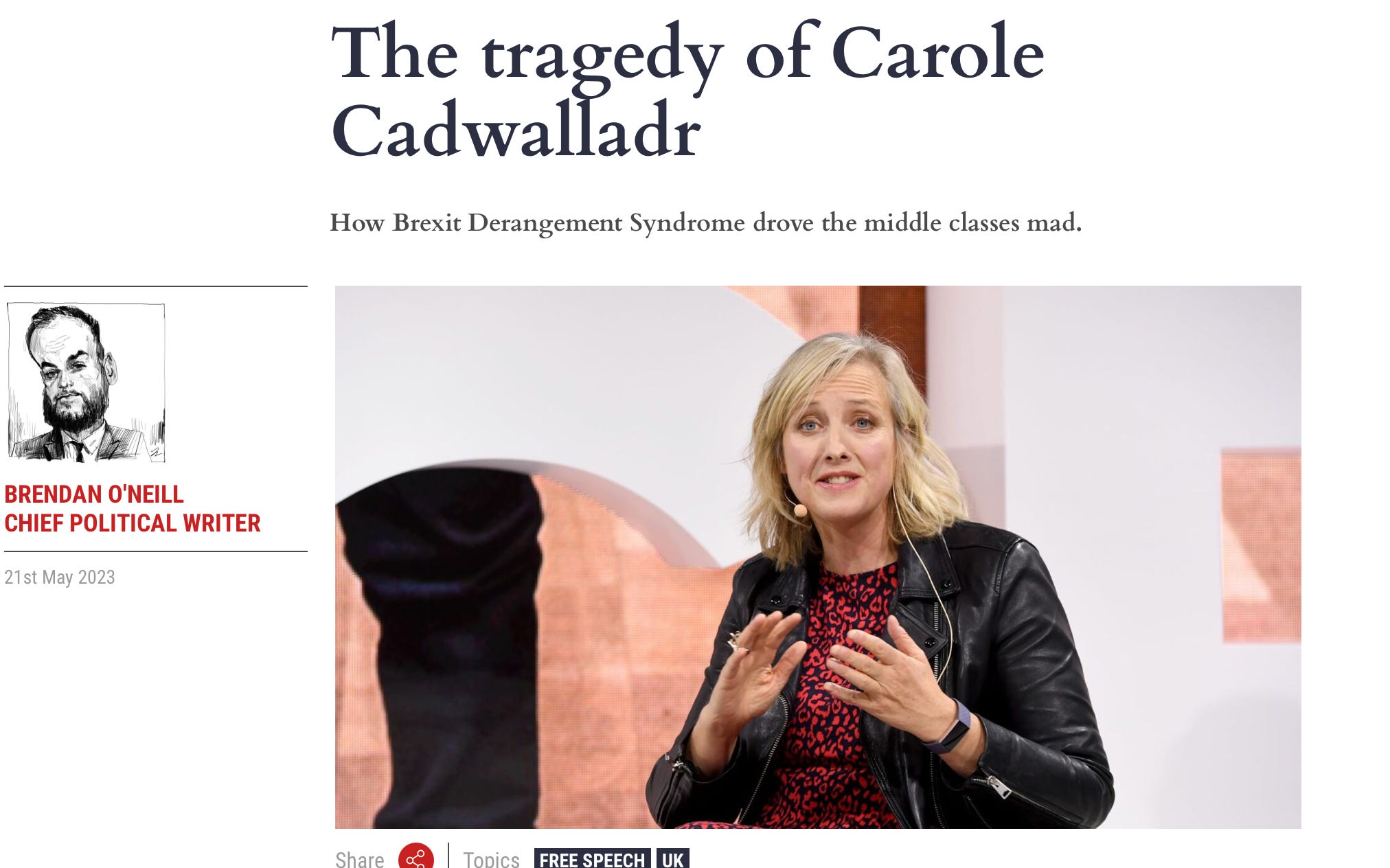
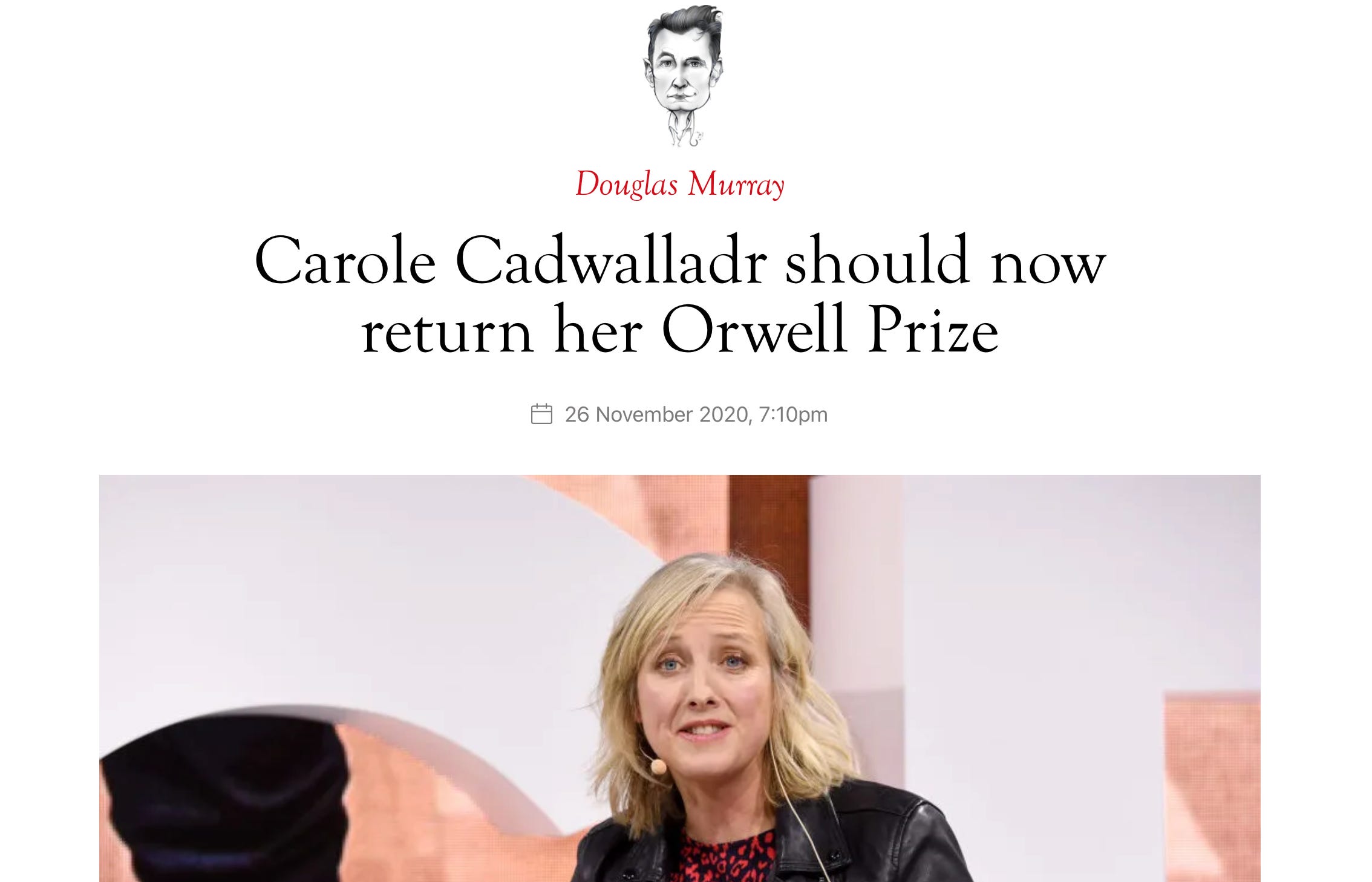
Last week, I wrote somewhat personally about my trial, and I’m going to refer to my own experience again because my practical suggestions are rooted in my lived experience. I went through a pale shadow of what Arday experienced but nevertheless I know many of these names who came for him, these “journalists”, these outlets. Because it’s same ones who came for me. Brendan O’Neill even used that exact same framing. I was a “tragedy” too.
It’s hard to explain what it’s like being at the centre of an online mobbing. I called it a digital witch burning, in my TED talk. In Arday’s case, it’s a digital lynching. These are online behaviours that map onto existing precedents, that draw on the same intolerances and historic prejudices. In my case, it was a misogynist witch hunt. In Arday’s case, a racist lynch mob.
That’s not hyperbole. I have chosen those words carefully. Sometimes we refer to “in real life” to signal the opposite of “online” but it’s a false distinction. Human behaviour is now expressed in the material and virtual worlds. Both are real. They prompt real emotions, real consequences, real violence.
There’s no such thing as “cyberbullying”. It’s just bullying.
And what I can’t adequately convey is how paralysed you feel when the mob comes for you. How helpless. I went through a fraction of what Arday did and it was still, at times, overwhelming. I mean that in the most literal sense.
One of my lowest points came in October 2020 after the first hearing in my libel case, the “meaning” hearing. And I have to briefly explain what happened to explain what followed. The judge got to decide the “meaning” of 21 words I’d said in a TED talk - that a Brexit funder had told lies about his relationship with the Russian government. I still can’t explain how on earth, he came to his decision, but Mr Justice Sani decided the words “meant” that I’d said he had illegally taken money from the Russian government. If you respond to that sentence with a what-the-actual-fuck, thank you. I felt like I’d gone mad.
It was utterly absurd. And it had profound consequences. It meant I had to defend the meaning of the words that the judge had come up with at my trial, not the actual words I’d said. And since I couldn’t defend the judge’s words, I had to withdraw my truth defence.
That triggered a whole sequence of events, an online and press shitstorm that went on for days. Articles in the right-wing press claimed that it “proved” I’d lied. That I’d “admitted” I’d made it up. That my journalism was utterly discredited. And every fresh article fuelled the online hate machine. The day this happened remains a dismal low point.
But what was far, far worse was knowing that it was only a warm-up for my actual trial. I knew if I lost, I would become a public humiliation spectacle. I wouldn’t just lose my flat and my ability to earn a living, I would be hung from a digital tree as Brexiteers gloated and rejoiced.
It’s the dread that got to me. It was knowing there was worse to come. I spent two years anticipating a full Ardaying.
I’m not recounting this for sympathy. Or to suggest that I have any idea of what Jason Arday experienced in the days before his death. But I can tell you about the feelings of despair and helplessness of being trapped in a false narrative that nonetheless gains purchase by repetition. There’s no smoke without fire. Except there is. These right-wing outlets are smoke machines.
How to help: a practical guide
Send a private message of support. If you have a way of emailing or messaging someone being monstered, just do it. If it’s an email, put your message in the subject line, so they don’t even have to open it. I have a practice of sending a private message to anyone I even vaguely know if I see them being subjected to a pile-on. But you don’t have to know someone, or agree with them, to see they are being subjected to unfair bullying. That message may never be seen or read but it’s a small but meaningful gesture.
Send a public message of support. The intention of this targeted media bullying is to shame and humiliate the subject, to undermine their credibility, silence their voice, to diminish them. Every crumb of support matters. And it matters doubly so, if you’re in the same or an aligned industry.
I probably know the name of every journalist who publicly supported me, and it’s not a long list. Even journalists I liked and respected, even some of those who I’d consider friends and allies, remained silent over years. There are multiple reasons behind this. Some fell for the right-wing narratives. And, as we saw in Jason Arday’s case, the media turned on those who publicly supported him. They became a target too. But it’s what makes it all the more important when people do show that support publicly. It has a psychological impact on the target, but it also acts as a small but significant brake on mob behaviour. It gives others the permission or confidence to break ranks and do the same.
Don’t join in. There was a point in the Arday story at which it crossed into one of my specialist interest areas: legal threats against journalists. It emerged Britain’s most expensive libel lawyers, Carter Ruck, had sent a letter on Arday’s behalf to a journalist at the Times Educational Supplement who had attempted to investigate the claims. I considered commenting but it was already obvious that every aspect of the story had become fuel for right-wing and racist voices. It also wasn’t clear, and still isn’t, whether Arday organised that letter, or paid for it. I didn’t speak up for Arday but I also didn’t join in, for which I’m now thankful.
Advocate for others. One of the biggest lessons I learned was how impossible it is to advocate for yourself. It’s not just exhausting, it also doesn’t work. It sounds like special pleading or, worse, whining. It’s like getting stabbed and then having to make a case for the police to investigate it when everyone’s telling you that you had it coming. I learned the biggest lesson in how to do this for others from my friend, Jess Search. Her great talent was to not to ask if I needed help, or how she could help, she just worked it out for herself. From organising a legal crowdfunder to getting random acquaintances to show up at my trial.
Jess tragically died much too young from a brain tumour and it was only after her death that I discovered that what she’d done for me, she’d done for dozens of other people too. She had a special gift. We can’t all be Jesses but I do often think “What would Jess do?” And the answer is: something. Sign the petition. Show solidarity. In this case, complain to IPSO, the press regulator.
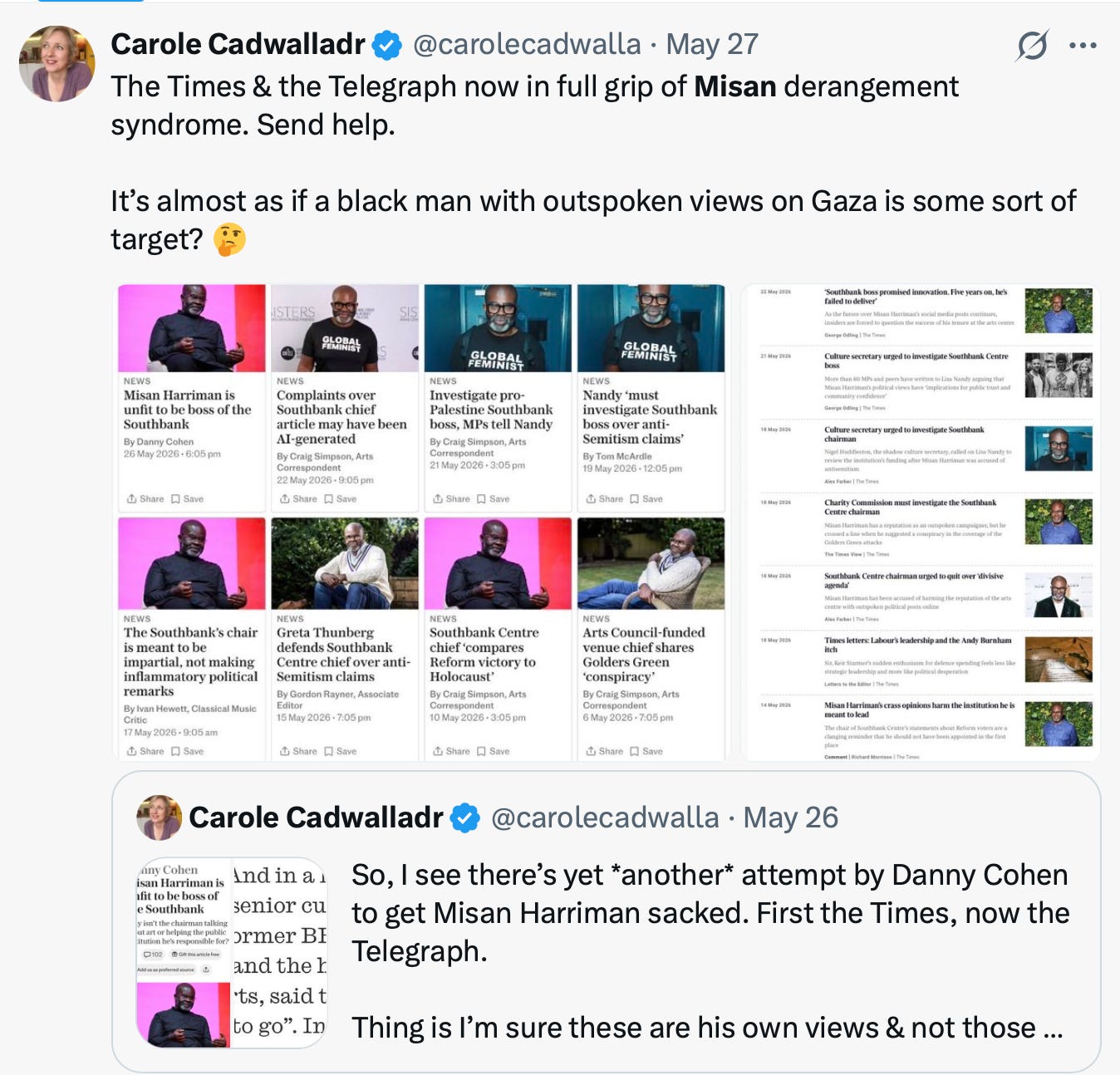
Ridicule them back. Before Jason Arday, there was Misan Harriman, a black artist who committed the crime of being black and having opinions. He’s also, unforgivably, friends with Meghan Markle, talking of online lynchings. Earlier this year, he was monstered by the same outlets who came after Arday. In his case, they were actively trying to get him sacked from his role as chair of the Southbank Centre. And the Times is still using him in their racebait ads. It’s a pattern.
Many journalists won’t criticise other outlets because you never know if or when you may need a new job. Celebrities and politicians know that it may make them the next target. Writers worry about their reviews. If you are a public figure and can speak up, consider doing so.
Change the frame. The man who started all this, Nathan Cofnas, is at the centre of a network of “race realists” and white supremacists. Not a single news outlet considered that worthy of investigation. Would it have made a difference? Not by the time the media shitshow was in full swing. But at the beginning? Yes, it absolutely would have. It’s ammunition for people online to fight back with. It’s why the absence of good reporting is as harmful as the presence of false reporting.
Bring in experts. Corporate communications and leadership teams need to understand what they’re dealing with is a hybrid information landscape that’s created new threats. Cambridge University didn’t just fail Arday in his moment of crisis, it contributed to the crisis. Simon Baron-Cohen told the BBC that Cambridge’s policy is that accusations of plagiarism are investigated by the award-giving university, Liverpool John Moores. In February, Baron-Cohen accompanied Arday to Liverpool for a hearing. He was found to have incorrectly cited the underlying work but the panel concluded this was an honest mistake. The work was credited elsewhere, just not in individual passages. He was cleared of the allegation of plagiarism.
But at the height of the media storm, Cambridge University reversed its previous decision and announced its own investigation. If there was a single moment or decision that damned Arday, it was perhaps this. Baron-Cohen said that Arday felt he had no choice but to resign. What followed he says was a mental health spiral that culminated in Arday’s death.
On Saturday morning, I messaged Nina Jankowicz, an American disinformation expert, for her thoughts. She’s written How to Lose an Information War and How to Be A Woman Online but she’s also been the target of an extreme MAGA monstering after Joe Biden appointed her to a White House “Disinformation Governance Board”.
Nina’s experience was horrific. She received threats of violence, had to move house, and much more. It affects her still. This is what she messaged back
I worry about the many people who will undoubtedly make themselves smaller after this campaign of hate. The people of color, the women who will eschew a life that has any public component for fear of what might be unleashed on them. Even if dismal human beings like [Nathan] Cofnas don’t succeed in literally policing academia or publishing, they may succeed in their campaign of self-censorship, unless institutions develop much more robust support structure for targets of networked harassment campaigns like this.
That means:
- Monitoring social media with an eye not only toward protecting the institution, but protecting its people.
- Proactively addressing “scandal” before the narrative is set—don’t wait for something to become front page news to respond. You aren’t being clever by “not giving the campaign oxygen,” you’re just allowing it to fester and allowing the story to be written for you.
- Providing physical security and mental health support to those under attack, including moving targets to safe locations, establishing regular check ins with mental health professionals if necessary, and generally being human and providing care. The last thing a person who is facing a networked harassment campaign wants to do is navigate bureaucracy to get the support they need.
She hits the nail on the head when she says that the trite crisis comms advice to “not give the campaign oxygen” is hugely damaging. And in Cambridge’s case, the reversal of their previous position appears to have put the impact on the institution’s reputation above other concerns including the fall-out on their own employee.
Anyone who is a “worker” under UK law has the right to minimum health and safety protections in the workplace. And there is nothing to suggest that Cambridge University took that obligation seriously. But then, few organisations or institutions understand how these hybrid attacks work, how to counteract them, how to protect the individuals involved.
Nina understands that from her own experience. And I learned the hard way too. If your organisation does not respond promptly, it’ll be too late. The standard corporate comms advice to “let it blow over” is hopeless when false and malicious information is circulating. Any social media policy that proposes individuals should “come off social media” is discriminatory: women and people of colour are disproportionately attacked online, you’re effectively allowing a mob to silence them.
If your organisation does not have a policy informed by someone with disinformation expertise and an individual who can act as an internal advocate for the person targeted, it’s just not equipped for the modern information age. Time and again, institutions take on the narratives of the attackers.
I couldn’t get the help I needed at my organisation and I failed in my attempts to get them put in place subsequently. My warning to the senior management team was that the next target is disproportionately likely to be a woman of colour. I felt like I’d barely survived. My worry was - still is - that the next target may not.
News organisations need to get their house in order but so does everybody else, academic institutions among them. Culture wars aren’t a natural phenomenon. They’re shaped by bad actors with agendas like Nathan Cofnas and enabled by the affordances of the platforms where we consume our information. These don’t just find new audiences for old prejudices, they monetise them. This is the engine of the internet, its dark capitalist heart. And until we understand that, we are doomed to repeat this story over and over again.
I leave you with this moving interview with Professor Simon Baron-Cohen that I’ve quoted throughout this newsletter. He talks about the kind, gentle friend that he lost. But he also talks, precisely, about the sequence of events that led up to his death. RIP Jason Arday. We failed you.
Simply a brilliant journalist doing the job properly. We really depend upon 'canaries in the coal mine' like Carol. I simply don't understand how some once respectable right of centre lost their morality. But appreciate it being called out. Thank you.
Thank you for speaking out on this I was cyber bullied before and it was atrocious people went after my family my parents ect. It was everyday harassment for years they tried to write me off, I moved many times and focused on my children. I couldn't control that beast at the time. Words do matter and words 🤕 hurt, they can build edify or destroy.. these journalist who contributed to this should be charged with murder .. 🫸 pushing people to suicide especially knowing he was autistic (a vunerable adult) is damning and concerning. A wrongful death lawsuit needs to be filed. Point me to advocacy